
Manage & Grow Your Money Without Feeling Lost
Already a Money Mastery student? The bootcamp is free for you. Click here for your access code.
Most People Stay Stuck.
They say they’ll “figure it out later.”
But later turns into years of hesitation, missed gains, and watching others build wealth while they stay stuck.
Not you.
You’re here and that alone puts you ahead of 90% of people.
But now comes the real shift:
You don’t just want to invest...
You want to do it with clarity, confidence, and a system that actually works for your life.
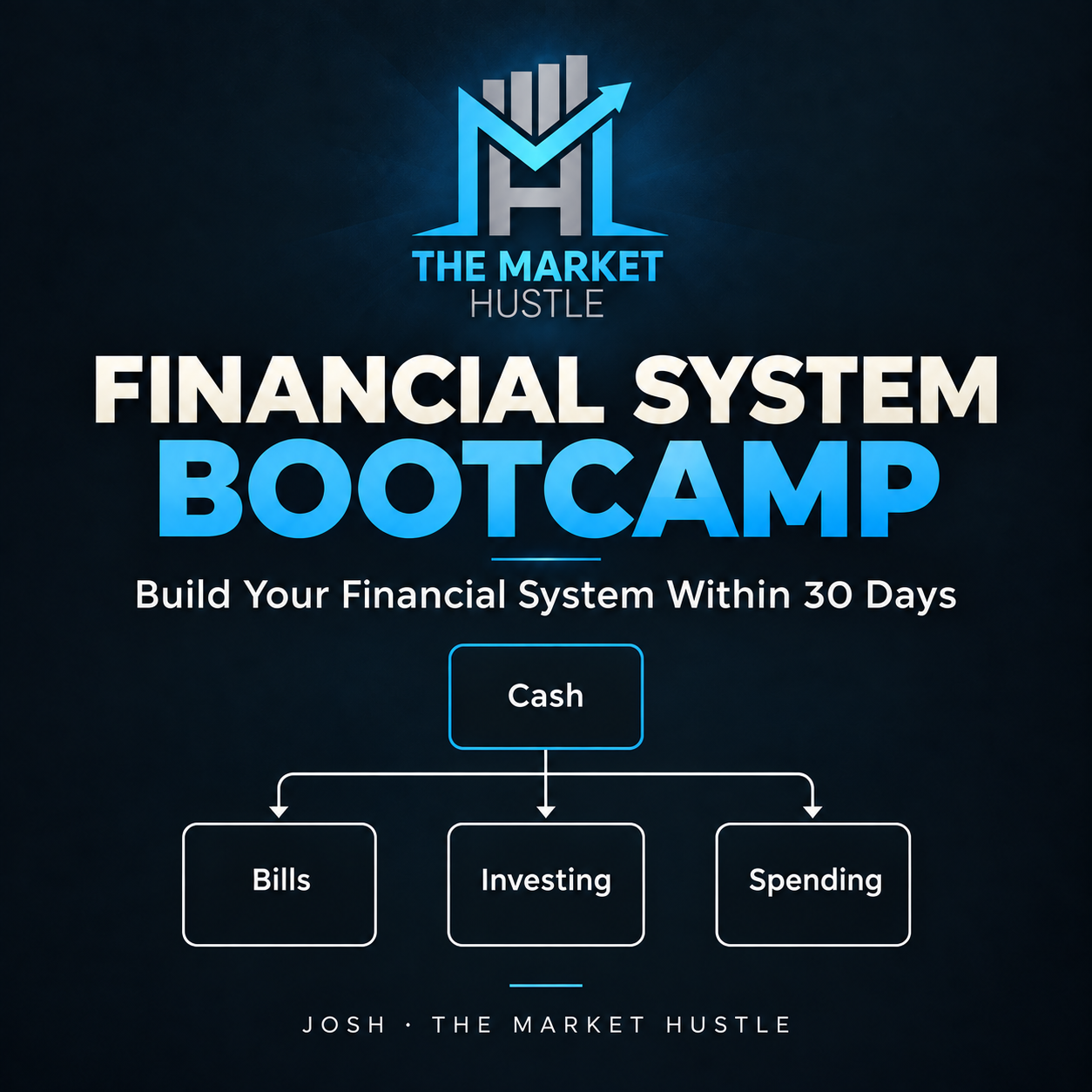
The Financial System Bootcamp helps you build that system in days, not years.
Without feeling overwhelmed, making expensive mistakes, or turning investing into a full-time job.
The lessons and tools in this bootcamp come from Money Mastery. These are Money Mastery students.
Zo
Money Mastery student
There is so much free financial information online, but sometimes more information just creates more noise. What I appreciated was having a framework that helped me actually take action.
Money Mastery helped me look at investing as a system rather than something I needed to constantly think about or perfectly time. I'm much more intentional about where my money goes, how my accounts work together, and how today's decisions connect to my long-term goals.
This bootcamp is for you if you want to:
- Build a clear plan for your money.
- Understand what you're investing in.
- Put a system in place that you know how to use.
- Have a step-by-step program if you're just getting started or already invest but still wonder if you're doing it right.
It's split into 4 Layers with implementation tools, 2 Investing Guides, and 4 Weeks of Email Coaching With Me.
Put what you've learned into a system you actually use.
A video explains Roth IRAs. A post compares ETFs. Someone else tells you to automate your money.
But you're still left figuring out how all of that fits your life.
I built the Financial System Bootcamp to help you connect those pieces.
We start with what you want your money to do. Then we work through your budget, investing fundamentals, portfolio structure, accounts, and automation.
Four layers. One a week. About two hours each. Each layer gives you something to understand and something to apply to your own finances.
The goal is a system you can explain, put into action, and keep using for decades.
4 layers to build your financial system:
Week 1, Layer 1: Give Your Money a Job
Get clear on where your money goes and what you want it to do.
Before you decide what to invest in, get a clearer view of the money you have to work with.
In this layer, you'll work through:
- Deciding what you want your money to help you do.
- Building your Budget to Freedom Planner.
- Looking for room in your budget to put toward your priorities.
- Building a debt payoff plan, if you have debt to address.
Put it to work: Use your own numbers to build a budget around your goals and figure out what you can consistently set aside.
Week 2, Layer 2: Understand What You're Investing In
Understand what happens after you click "buy."
Investing gets easier to make sense of when you understand what you own, how investors can make money, and what compounding actually means.
This layer covers:
- How the stock market works.
- How investors can earn returns.
- How compounding works over time.
- The foundations in Investing 101: A Beginner's Guide to Stock Market Investing, included with the program.
Put it to work: Build the understanding to explain what you're buying and how it connects to your long-term goals.
Dixon
Money Mastery student, Hong Kong
In the beginning, I was just throwing random amounts at my loans each month and hoping for the best.
Since I started using the Budget To Freedom Planner, I now have absolute clarity and a systematic approach to tackling my student debt while also building my emergency fund. I can see exactly where every dollar goes, which is why I've already duplicated the 2026 version to keep my momentum.
Week 3, Layer 3: Build a Simple Long-Term Investing System
See how your investments fit together.
If you've been collecting funds and wondering whether they belong in the same portfolio, this is where we connect the dots.
You'll work through:
- Organizing your investments in the Market Hustle Portfolio Hub.
- Understanding the job of a core ETF.
- Understanding how satellite ETFs can add targeted exposure.
- Building a framework to keep your portfolio organized.
- Exploring diversification and allocation frameworks with Beyond the S&P 500: A Thinking Investor's Guide to Diversification, included with the program.
Put it to work: Bring your investments into one view and start evaluating what each holding contributes to the whole.
Week 4, Layer 4: Put Your System Into Action
Connect the plan to what you actually do with your money.
Understanding investing is one part. Knowing how to use your accounts and follow through is another.
This layer walks through:
- Investment accounts and taxable brokerages.
- The Waterfall Method, a framework for thinking through which account to fund first.
- A step-by-step buying walkthrough using Fidelity.
- Creating a cash deployment plan and setting up automation.
Put it to work: Work out your account priorities and a contribution routine that fits the plan you've built.
Amith N.
Money Mastery student
Before, I was already investing, but with no system. I bought random stocks that looked interesting in the moment, and I was thinking in weeks or months, not years.
What changed: I started thinking in decades instead, and I stopped assuming I had to pick individual names to do well. I'd have been better off starting with a system a year earlier.
The tools are included. Use them alongside your own numbers.
- 2026 Budget to Freedom Planner: Organize your income and spending so you can see what you have to work with.
- Debt Payoff Tool: Map out a repayment plan and estimate your payoff timeline based on the numbers you enter.
- Market Hustle Portfolio Hub: Bring investments across your accounts into one Google Sheet so you can see the bigger picture.
- Investing 101, A Beginner's Guide to Stock Market Investing: Build your foundation and revisit concepts as you work through the lessons.
- Beyond the S&P 500, A Thinking Investor's Guide to Diversification: Take a closer look at diversification, allocation, and how different investments can fit into a portfolio.
Bonus: 4 Weeks of Email Coaching With Me
If you get stuck, just send me an email and I'll help you get through it.
Maybe you're working through the planner and something isn't clicking. Maybe a lesson raises a question. Maybe you're having trouble connecting one step to the next.
Tell me where you are and what you're stuck on. I'll help you work through the material and tools so you can keep moving.
The coaching is here to help you understand and apply what you're learning. You'll still make your own financial decisions.
What putting the system together looks like.
Imagine your next payday.
You can look at your planner and see what needs to cover your bills, what you want available for spending, and what you've planned for saving, debt, or investing.
When you put money into an investment account, you understand what that account is for and how the investment fits your plan.
You have a repeatable process to come back to when a new opinion shows up in your feed.
That's what we're working toward. More clarity in the decisions you make with your money.
Yadira N.
Money Mastery student
Before, I was saving money, but I wasn't investing. I saw the stock market as too risky, so I stayed away. I felt lost about where to begin.
The most significant change has been transitioning from merely saving to actively having a plan for my money. Today I contribute to my Roth 401(k), max out my Roth IRA, and invest monthly in a brokerage account. The most profound difference isn't the amount I'm investing. It's the confidence I have in knowing why I'm doing it.
I'm Josh, Creator of The Market Hustle

I didn't grow up with money.
And when I first tried to talk to a financial advisor, they basically said:
"Come back when you've got six figures."
So I taught myself.
I read every book. Got a business degree. Invested through good markets and bad.
And eventually built a system that combined everything I'd learned.
That system became Market Hustle's mission.
Built for people who feel behind, overwhelmed, or tired of trying to piece it all together from random social media posts.
Brian E.
Money Mastery student
Before Money Mastery, I had a financial advisor running my accounts with little control and a huge AUM fee.
Money Mastery gave me the confidence to take control of my money on my own.

You might be thinking: "Is this just more content I won't use?"
Fair. So here's the deal.
Go through the entire bootcamp and complete the implementation steps. If you don't feel clearer, more confident, and better equipped to manage your money on your own, email me within 60 days of purchase for a full refund.
I can offer that because I've watched what happens when people finally stop piecing it together alone and follow one clear system instead. They stop hesitating. They move.
"This was the single best financial education I've ever gotten."
Dylan, Money Mastery student. The bootcamp is built from the same lessons and tools he went through.
Watch the full 40-minute conversation with Dylan here. Results vary. Dylan's experience is his own.
Things you don't need to start.
- A big income. The planner works with your numbers, whatever they are.
- To be debt-free first. Layer 1 includes a debt payoff plan, and the Waterfall Method covers where debt fits.
- To pick stocks. The system is built around ETFs and accounts, not tickers.
- A finance degree. Investing 101 is included for a reason.
- To have it all figured out by October. One layer a week. You can go slower.
- A perfect month to start. Your next payday is enough.
Mia M.
Money Mastery student
I knew the basics of emergency funds, 401ks, and Roth IRAs, but after Money Mastery I was able to actually apply what I know. It helps you not just understand it, it helps you take action.
The finance space is oversaturated with hype, products, and courses that lack substance. Money Mastery is the exact opposite.
Is this a fit for where you are?
This program is built for you if:
- You're good at saving but unsure how to begin investing.
- You've started investing but feel inconsistent or uncertain.
- You invest regularly and want a clearer system around it.
- You want to connect your budget, accounts, and investments to your goals.
- You want to learn the reasoning behind your decisions and apply it yourself.
You'll need to bring your own numbers, work through the material, and put time into applying it.
The bootcamp teaches the foundations of a long-term financial system.
It doesn't promise investment returns, eliminate market risk, or make your financial decisions for you.
A.R.
Money Mastery student
I knew some of the basics but never had a clear plan for what to do with my money or how to build wealth long term.
The course made everything feel much simpler and gave me a clear direction. I feel a lot more confident about investing and, more importantly, motivated to take action.
The short version (for the scrollers)
Four layers. Four weeks.
Budget, stock market, portfolio, then your first automatic investment.
Two guides, the 2026 planner, the Portfolio Hub, the Money Mastery lessons behind each layer, and four weeks of email coaching with me.
$257 $127, one-time with a 60-day "do-the-work" refund.
I already invest. Will this still be useful?
What if I'm completely new?
I already follow you for free. What's different?
How is this different from Money Mastery?
How much time does it take?
Is this self-paced?
What if I don't have much money to invest yet?
Will you tell me exactly what to buy?
Does this work outside the United States?
What if I already own Money Mastery?
